Monday, February 14, 2011

Return to my Old Home


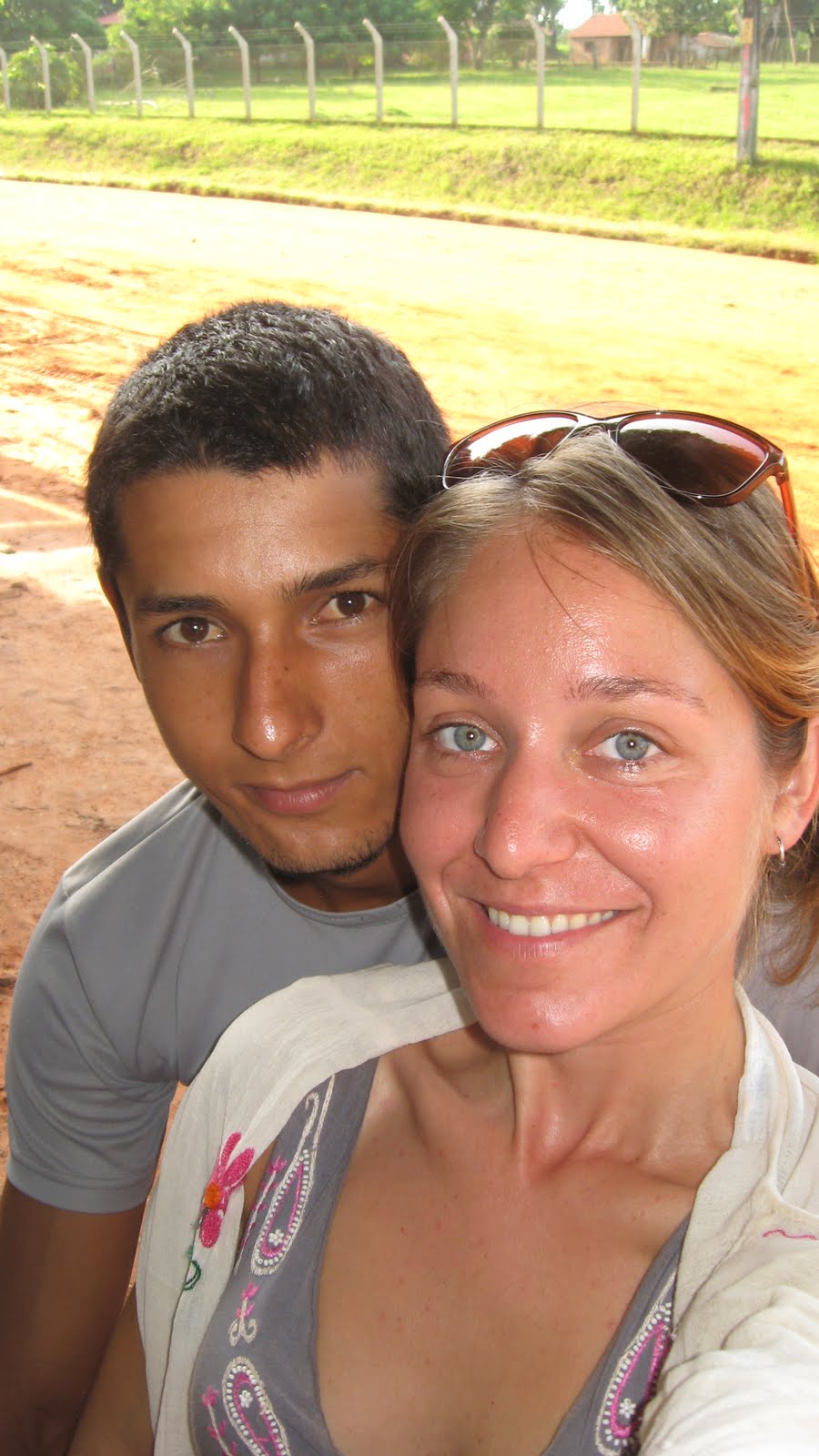
After Bolivia my travels took me back through Paraguay to visit volunteer friends and reconnect with my community. I had been a bit nervous about returning, wondering what my place would be in Arroyo Moroti after leaving two months beforehand. My work there is done, and there is another volunteer in my place now.

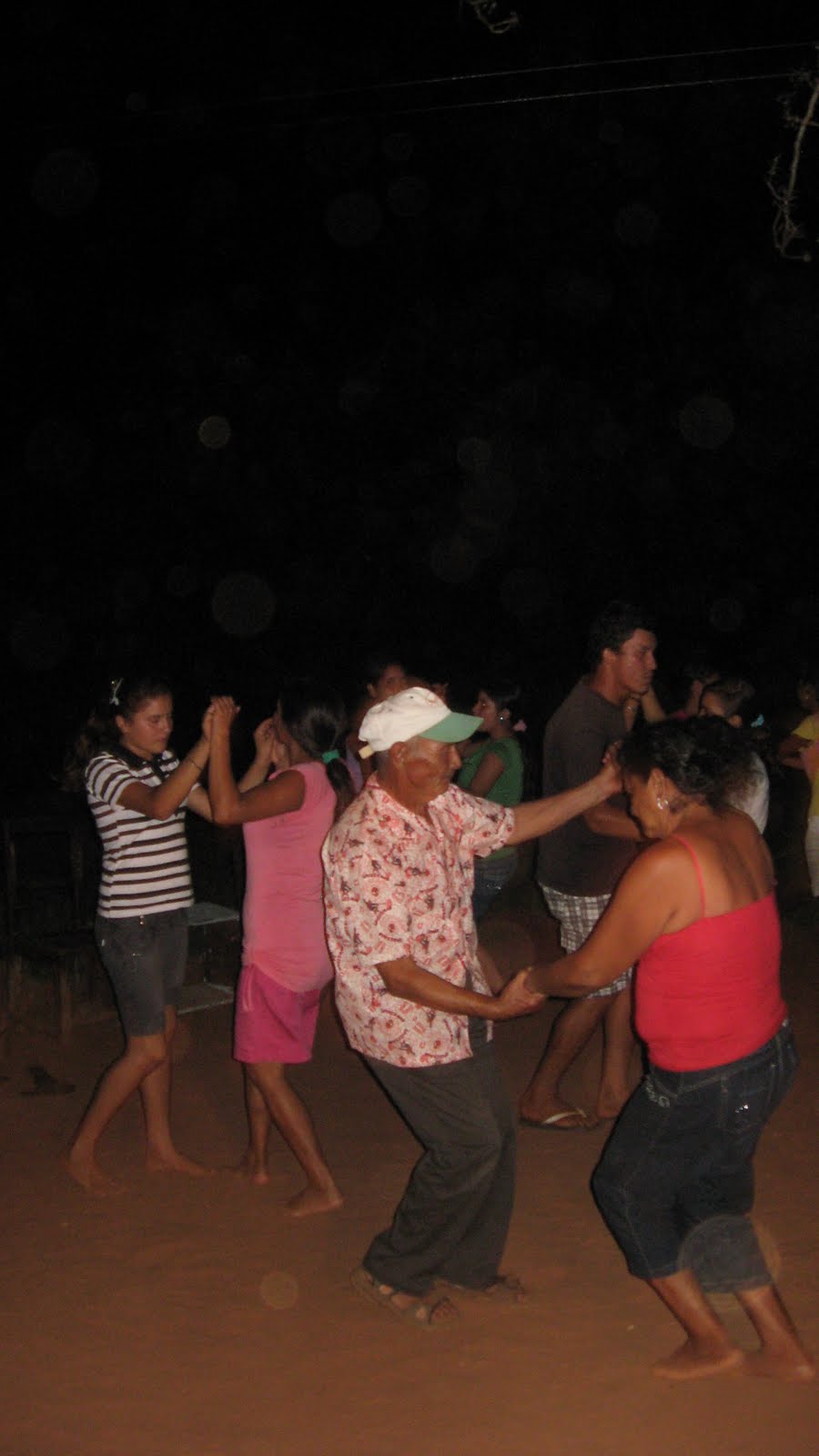
At the end of November I had two despedidas (going-away parties). One was sponsored by my farmers´committee, who killed a pig and chickens and gifted me and personalized leather terere set. My next despedida involved the whole community, or at least the people I knew. MOre grilled meat, more sopa, more dancing, and a drunken fist fight. Both of these parties were touching, but my last dinner with my favorite host family was the most emotional. My host mother, Marina, who has been a bottomless pit of support for me over the past two years, took me in her arms and told me how proud of me she was, and that I have become their daughter, sister, and friend; that I am always welcome in their family. We were all crying, even my 13-year-old host brother, Gustavo, and my shy dad.


I cried again as I watched the sun rise on the bus to the city, and many times after that. It was not only the sadness of leaving people who have become dear to me, but leaving a life that I have been blessed to experience and will probably never have again. Being a visitor to Arroyo Moroti is a definate plan, but I hold no false hopes that everything will be the same.

With these thoughts, I arrived back to Arroyo Moroti, on moto, and I felt completely welcomed and loved. I ate lunch at a different house everyday, a campo fiesta was thrown in my honor, and I felt free to enjoy the priveleges of living in Paraguay without the responsibility that came with working there. After a week, it was hard to leave a second time, as well, but now I know how easy it is to return.


My next adventures take me into the enchanted mountains of Brazil, where I am currently studying yoga. More on that later...

Wednesday, February 9, 2011

Our Just Deserts


The desert wants to keep me, and I haven´t yet decided if it´s out of love or hatred--towards me, that is. My nostrils burn from the high, dry air, and everything is covered in a fine coat of desert dust.

The first desert adventure began as Jason and I were heading north from Chile to El Bolson, a little micro-climate hippy community just south of Bariloche, Argentina. The bus treks up Route 40, which is nothing more than gravel streching through an endless desert, east of the Andes. The trip was supposed to take 25 hours, already a harrying journey on a crammed bus on bumpy roads. Halfway into the trip the bus broke down and after hours of poking, prodding, and crawling under the bus, it was deemed unfixable. As we were in the middle of the desert with no cell service (less water or food), we had to wait until someone passed us to send a message along for them to send a rescue bus...and hope that the message was transferred. We finally got word that one was on the way and would arrive in about ten hours. So we waited.

We scooped sludgy water from a questionable pit 3km down the road, and dug through my pack for the iodine tablets. The hot sun slipped below the brown horizon and left us in a bitterly cold night, and still no bus in site. We spent the night on the bus, and 24 hours later, a bus finally showed. Apparently the rescue bus had broken down, as well, and this was the third try. We arrived at our destination one hour before 2011.


The desert tried to take us again at Quebrada del Diablo, a `mountain-biker´s paradise´ outside of San Pedro de Atacama, in northern Chile. We rented bikes, lathered on sunblock, and headed out to crumbly grey rocks below a blue, cloudless sky. After crossing a river up to my shins, the sandy trail narrowed into a crude labrynth of compressed sand and clay (which is only held together because it never rains) with outcroppings, sharp corners, and a few places where we had to lift the bikes up to continue. At one point, a smaller trail led off to the right, and I parked my bike and followed it on foot. Soon the trail forked. It forked again. And again and again with no end in site. That was when I first felt the presence of this canyon´s namesake (i.e. devil). So I turned around, and we continued on our collective four wheels.

Two-and-a-half hours into the journey, my bike chain broke, and after multiple failed attempts at reconnecting it, we decided that one of us had to go on ahead for help. The map clearly markes this as a loop, but the trail was getting more sketchy, with more forks and less clarity. Plus, the sun was hot, and our water bottles were not getting any fuller. Jason started walking my bike back the way we came, and I sped ahead on his bike as fast as I could, considering my options, knowing no car or even a horse could make it through here. Images of Ralph Fiennes in `The English Patient` kept creeping into my head, him stumbling down dunes in a desheveled turban, crazed from dehydration. Perhaps it was these fantasies, but I arrived surprizingly quickly to the river, where about ten people were hanging out in the water. Jason arrived shortly after, and we got a ride back into town with a local family, disaster averted.

It has not rained in San Pedro de Atacama since 2000. It used to rain in this desert oasis more like seven days a year, but now water is scarce. The riverbed is a pile of dusty rocks, and from the top of the lookout I climbed (where the indigenous peoples held a fortress and managed to stave off for the Spaniards for a good number of years), I could see a swath of green snaking through the valley and widening at the town--the oasis, the product of a one-meter-wide canal coming from the river.


Back when it used to rain, farmers were allotted an hour each day to irrigate their corn and wheat. Now there is no wheat and little corn. Food is expensive, as you might imagine, but locals love this place and are proud of their roots, and tourists flock here from all over the world. Rightfully so. There is a lot to do here, just walking and biking distance from this tiny pueblo. We managed to go sandboarding (think snowboarding, but on sand dunes), watched the sun set over Valle de la Luna (so called because of the formations in the rock which resemble the surface of the moon), walked through ancient ruins, and watched stars through telescopes in the middle of the dark desert, where I bathed in starlight that had been travelling since the time of Colombus to get to me.

Sunday, December 26, 2010

The Beginning of a Long Series of Fortuitous Successes

The End of the World is far, far away. And it is cold, even during this supposed summer. Tierra del Fuego (Land of Fire) was so named because of the explorer, Magellan, who sailed on over from Portugal in 1520 and saw the campfires of the Yaghan native people (now pretty much extinct) dotting the coastline. It is a beautiful, yet testing region. The climate, which is described as ´inhospitable´, is unpredictable, with biting winds that suddenly surrender to warmth of the sun, only to disappear again around the next corner.

My brotherman, Jason, and I landed in Ushuaia, the world´s southern-most city, on December 14th and headed straight for el Parque Nacional de Tierra del Fuego. After some initial hurdles (i.e. arriving to the airport two days early), as soon as we found our first campsite (see photo), things seemed to be looking up. We were greeted by a pair of native geese (they stay with the same mate for life) and a bunch of wild bunnies, and we set up the tent next to winding river carrying glacial melt. It took a while just to decide which way to face the tent, as there are no shortage of beautiful views in all directions.

That first night, exhausted from the trip from Buenos Aires, we sat in the tent, sheltered from the unrelenting cold and wind, waiting for some sign of bedtime, only to realize it was already 9pm, and we still had to cook dinner. We went to sleep an hour later with no sign of approaching darkness. This is, afterall, the bottom of the world in summertime. Another night we dined with a view of the harbor at 11pm, watching the glowing pinks and purples of an eternal sunset.

After a few days of hiking around the park, we caught a bus heading north. The road hugs the Atlantic coastline, and we left the lush, jagged hills for a more arid landscape teeming with guanacos (like llamas), and crossed over into Chile´s Patagonia. Patagonia lives up to its reputation of having some of the most beautiful scenery in the world. We stayed two nights in the small town of Puerto Natales to stock up on supplies for a week-long backpacking trip in the national park of Torres del Paine.

The first day we walked 20km to the first campsite, a meadow covered in daisies and nestled up against snow-littered mountains. But even these huge mountains were no respite from the fickle winds. The weather in general here is unpredictable, to say the least. Locals laugh when asked about the forecast. They look up at the sky and say something like, ¨Well, it´s raining now.¨ Now is all we can really know.

Our route was a circuit that guided us over ridges and through valleys, circling huge enormous granite towers, which are the park´s centerpiece. Walking towards them in the sun that first day, they looked majestic and grand—the Emerald City tured brown. But the winds change around every ridge. One minute it´s hot and sunny, and the next the rain spits and the wind threatens to blow you off the trail and down the ravine into the iceberg-ridden lake below. When the fog lifts enough to see the towers, they look evil an morbid, resembling the residence of the Wicked Witch of the West.

The winds started up the first night, pushing the tent down on top of us. I lay in my sleeping bag, not sleeping, listening to the wildness outside,and finally getting up the nerve to go pee. The nearly-full moon was behind a cloud, but still lighting up the sky and making the daisies glow earily.

The next morning we packed up our bags in the rain and walked 19km in a continuous downpour. When we finally arrived and set up the tent, I found that ´waterproof´ does not really exist, and that everything—icluding the tent and my sleeping—was soaked. Very luckily, at that location there happened to be a refugio, a little cabin with a woodstove and bunkbeds for a fee. After chatting with a Spanish woman who was victim to the same, wet fate, I decided to stay in the cabin that night, instead of toughing it out in the tent, like Jason. I sat around the woodstove with fellow hikers from the US, England, New Zealand, Spain, Italy, and Chile. We formed a good little group, leapfrogging each other on the trail the entire week.

I received a wonderful gift of two garbage bags, in which I placed all my belongings before putting them inside my pack. We headed out anew that Solstice morning, with mostly-clear skies and the longest day of the year (and probably my life) ahead of us. When we climbed above the treeline, the wind was unbelievable; Jason guessed it was blowing about 80mph. I would steady myself and my pack against it, and then all of a sudden it would gust up and literally knock me down. During these gusts all I could do was surrender to it and remain on the ground long enough to catch my breath.

The next few days took us trudging up steep, snowy slopes and crossing a peak to finally give us a view of Glacier Grey, an enormous mass of ice that, during this warmer season, drops house-size chunks of itself into the crystal, blue lake below. We trudged through the mud, frolicked through fields of wildflowers, and hopped on rocks across frigid streams. At one of our last campsites we looked up from setting up the tent to see an avalanche screaming down the mountain on the other side of the river from us. Glaciers and avalanches exist on the news or in National Geographic; I never imagined I would actually see (and hear) them.

We spent Christmas Eve huddled inside the tent, feasting on instant mashed potatoes and Ramen noodles, and decided that we deserved a real Christmas meal. So, despite aching muscles and blistered feet (my toes and heals were covered in duct tape), we woke up early, completed the park circuit, and caught a bus back into civilization for some well-deserved skyping, ice-cream, wine, salmon, and dancing (in that order).

We just dropped off 7 kilos of dirty laundry at the laundromat in preparation for the continued journey north. Tuesday we head to the Fitz Roy Mountains in the southern Andes for some day hikes. To the North!

Friday, December 10, 2010

A New Era

Lounging poolside with a view of the Sierra Mountains rising up 60 degrees around me and Mendoza's finely-tended grapes are pushing Paraguay further and further away. This is a rare vacation in which my mind is empty of responsibility.

This is truly the beginning of a brand-new era. I finally have the outer tranquility to rewind back to my time in Paraguay and replay the last few months there. I feel like I was an outsider watching myself take part in this life, while I merely commented on the outcomes. Between finishing up my projects in site, passing on my knowledge to fresh-off-the-plane volunteers, and finding as many excuses as possible to celebrate, I found little will to record or share.

That has been a theme in Paraguay. An avid journaler for most of my life, my little moleskin notebook sat on my shelf, collecting red dirt and spiderwebs. I've been too busy living, taking advantage of the time I had left in my community. A few highlights:

-organizing a five-day field practice for volunteers in training.

-thanksgiving with jason's bunny (i.e. mustard-crusted rabbit in white wine sauce, stuffed squash, and peach pie. This really deserves an entire entry).


Next step: Tierra del Fuego. More on that later.

Thursday, October 7, 2010

Preparing Tomorrow's Leaders (and Followers)


"We're all grand at 17."

Katherine Hepburn's character says that in Holiday, and it is what comes to mind when I think or hear about the vitality of you youth. I don't look back at that age necessarily fondly, and I would never will myself that age again. Every year continues to improve, and I only...mostly look forward to ageing. But there is something special, something vital, powerful, and dangerous about that age. At seventeen, we wrap ourselves in a cloak of invincibility, which is surprizingly-easily pierced by daggers of vulnerability. But we are willing to fight for what's right, what's wrong; to just do something to prove this world we live in is real and that we have some influence in it.

To that end, it has been both the most challenging and the most rewarding to work with this age group. Watching this vitality and energy with no outlet led me to organize a career fair at my local high school. A few weeks after a 16-year-old student died while racing his moto, the event took place, in attendance, my local students and the neighboring high school's students. Representatives from a nearby university came to explain programs of study and to give aptitude tests to the seniors. For the rest, I organized round-robin sessions, in which I quickly taught the local teachers how to lead. Activities included writing and sharing personal goals, mentors, and influences, making collages, reading an inspirational story, and playing team-building games. And, miraculously (because it rains at every event I plan), the rain held off until we were leaving. I know that for most students, the career fair was nothing more than a change of pace for the day, but I hope that it inspired a few to look further.

And then youth get old...


I cannot say that I am not shocked and confused beyond belief that so many Paraguayans live for so long. One of my host dads turns 100 in March, and he is still very much alive, and I just went to a 97-year-old birthday party. The other day, I went for a jog, and ten minutes in, I crossed paths with an 88-year-old woman on her way home from selling chipa at the soccer game. She stopped me and explained that she had one more chipa left in her basket and wanted to give it to me. She proceeded to dig through her basket, where she found her dentures, and then, further down, the remaining chipa. I continued my jog carrying the questionable snack, every appreciative of my unexpected encounters.

Wednesday, July 21, 2010

Winter Perspective

--the following photographs were taken my my ninth-grade photography students, three of which were chosen for the national exhibit in Asuncion! The blond girl in the photo is from the family I mention in the entry---

The cold is here. I cover my tomato and strawberry plants at night, protection against that a frost that could wipe out months of labor and delicous potential in a single nippy night. The combination of cold and rain prompted me to break out my brasero for the first time this year. A brasero is a little metal bin used for burning charcoal (made locally with a dwindling supply of trees). In the winter it is used as a central source of heat and cooking utility. It assists my bread dough to rise, dries my socks, and keeps a steady supply of hot water to feed my bottomless thermos and mate addiction.

I have also learned to slaughter chickens, and am proud to have been a part of the entire process from raising the chicks, twisting their necks, cleaning out the organs, and feasting on tasty pollo al horno!


I was planning to go to an agriculture workshop to talk about green manures, but a rain day was in order instead. Before I left for Peru, I had been feeling generally frustrated with life here and somewhat useless professionally. I have come back from vacation with a renewled energy for my work--and urgency, as well, knowing that I only have four-and-a-half months left here. I feel like I have a responsibility to expound all the knowledge I can before I leave, but after almost two years in Paraguay I have a more realistic sense of what is possible, practical, and within my limits of sanity. For example, instead of promoting green manures in general--covercrops which suppress weeds, aerate soil, fix nitrogen, prevent erosion, attract beneficial insects, and some of which can be used for animal and human consumption--I need to provide a breakdown of exactly how they will be incorporated into existing crops. One would thing I would have figured this out earlier, but I´ve been getting my own education about Paraguayan crops, and timing is everything.

Yet reality tends to put things in perspective. As I said, I came back with a gung-ho attitude about promoting more sustainable agricultural techniques, and the same day I started planning presentations, I got word that a 35-year-old woman in my community had just given birth to her 19th child (three have died), and both she and her husband (whom is opposed to birth control) are in the hospital in Villarrica, leaving fifteen children to fend for themselves at home. I went with a few SeƱoras to their secluded home to see how they were holding up. When I arrived the kids were piled around the cooking fire on the ground, eating beans out of three plates and a few plastic lids. Despite the cold, they were all either in flipflops or barefoot and no underwear. It´s nearly impossible to guess their ages due to mal-nourishment. One boy just turned fifteen, but I had assumed he was about eight years old. They all have a serious lice infestation, and half of them have sores on their scalps, which I believe are caused by a worm that burrows there, and is easily transmitable. We washed their hair one by one in a tub of warm water, and treated their scalp sores with alcohol. I have never seen anything like it.

The next day I made a double batch of banana bread, and I put together a bag os soaps, crakyons, toys, socks, and warm clothes that I scrouned from around my house, and I made the trip back. I am not usually a fan of donations, which are generally unsunstainable, but I´m also a member of that community and can´t ignore the needs of those right in front of me. Barefoot and covered in snot, the six or seven smallest ones came running out to meet me and all vied for one of my hands. I treated their scalps again, and we played soccer. I drank terere with their dad, whom had just returned after two weeks in the hospital. Because of the high-risk pregnancy, they had to do an early C-section, from which the mom and her new daughter are still recovering. I was friendly and cautious with the father, because I knew he was proud about accepting outside help, though I wanted to slap him into reality.

So...I may need to take a step back from my prior planning and promote some family planning and basic hygeine. First things first.

Sunday, July 4, 2010

Cheery Reflections from the Dreary City


If Lima, Peru is good for something, it gives me a moment to reflect and record the events of the past couple weeks. Because there is nothing else to do here. The city is draped in a heavy cloak of fog and the occassional mist. It´s not the sort of fog that added beauty and enigma to Machu Picchu, but the kind of grey oppression that makes you want to sit in a cafe, listening to ´90s mucic by the Smashing Pumpkinds, Nirvana, and Weezer, while sucking down Americanos and apple pie (I can´t get this stuff in Paraguay!).

It being Sunday, I can´t even fulfill my idea of shopping, or at least trying on the latest Peruvian fashions for kicks, because everything is closed. I did discover the ¨Atlantic City¨ of Lima. The doorman looked me up and down from my hairwrap, fanny pack, down to my dirty converse, but welcomed me anyway. I´ll have to rely on my farm to make my first million because Fairy Play slot machines will not. Fummu, Nischaya, Allegra, and Zuzu were only too happy to spend their last remaining hours in South America at the airport, and left me lastnight to search for the key to unlock the hidden charms of Lima. I think the treasure may be this cafe...and the Parque del Amor, covered in colorful tiles and romantic quotes. I´m sure I´m not doing the city justice, but it just doesn´t hold that instantaneous, heart-melting, breath-taking--literally--charm of Cusco and the Sacred Valley.


Two weeks ago Jorge and I went to Puerto de Iguazu, Argentina to meet up with my dad and company, and to explore together that dizzying monstrosity of water on the triple border of Paraguay, Argentina, and Brazil. We then went back to my community, where I put the four of them up in my house, and they discovered the joys and sorrows of barefoot soccer, cow slaughter, bucket baths (or not), and the fiesta de San Juan, where drunken, masked men vie for chances to climb a pole to reach a cardboard box that contains money and wine.


The past week and a half has been spent exploring some of Peru´s many magical nooks and crannies. The ruins here are not just old rocks, but seemingly-living reminders of a lost race: the Inca. It´s refreshing to see the Peruvian people embrace their ancestral heritage, keeping alive traditional dress and ceremonies, instead of hiding and denying them shamefully, as is the practice in Paraguay.


From the market of Pisac, to the salt mines of Salinas, the terraced circles of Moray, and the steep horseback ride to Pumamarca, the Sacred Valley won my heart and my promise to return. My most memorable night was on the full lmoon in the village of Ollantaytambo, when a few of us, led by a new, local friend, jumped over a stream and crossed fields to sneak into the ruins overlooking the town. These still surprizngly-intact ruins include temples and a fortress, and was one of the few places where the Inca won a major battle against the Spanish.


Machu Picchu was, of course, incredible, especially the one-thousand-foot ascent to Wayna Picchu, which looks out through the clouds over the ancient city of Machu Picchu, and then around the mountain to the Temple of the Moon, where priestesses protected a sacred cave. My legs were sore for days afterwards, greatly eased by a yoga class in Cusco--my first class in almost two years!


Now I´m spending my Independence Day alone, but surrounded by other travellers--Brazillians, Spaniards, and English---all on their way somewhere else. After reading about the American Revolution in Howard Zinn´s ¨A People´s History of the United States of America,¨ the 4th of July means much less. Zinn convinces us that the grand majority of the early settlers didn´t care much whether they were oppressed by the English or by the wealthy 5% of the new Americans, which included the founding fathers. Free or not, they were hungry, poor, and maltreated. However, I do miss me some good, American fireworks.