Sunday, September 8, 2013

Finding Home

This is my life: I live in a barn with my sweet, hardworking, handsome fiance, four chickens, two rabbits, a disappearing cat, a shy mouse, and quite a few curious, yet respectful spiders.   I daydream about a Vita-mix and electricity to run it.   I also imagine bathtubs and hot, running water with which to fill them. Though these are good fodder for thought, I am content; more content, in fact, than I can ever remember being.
                                          *                        *                    *                    *


I am awake before five this morning, laying in bed and listening to the rain pound on the metal roof of the barn. I pull on clothes from the day before, plus a wool jacket to defend against morning temperatures, even in August. I heave open one of the sliding barn doors to let in some light. Pale pink clouds make wispy streaks above the massive cedar trees. The chickens, hearing me rustle around, call out. I put the coffee percolator on the propane stove before going to let them out of their coop. Cricket-Cricket, Pincho, Fraulein, and Red hop-slide down the ladder directly to their food. Trillium, the doe rabbit, starts running back and forth in her hutch excitedly, while old-man Jackson sits in the bathroom corner of his hutch and stares with his huge, bunny eyes. The rain has stopped, though overhead trees drip an omnipresent reminder of the night's precipitation. By now the sky is clearing to light blue, and mauve clouds are drifting away to
Green manures sprouting.
make room for what looks like another hot day. Hopefully there was enough rain that I don't have to water the slope that is planted with green manure seeds, which need daily watering during this time. Of course, the area underneath the biggest cedar tree is bone dry. I did not have much hope for cultivation there, anyway. It also looks like the chickens are having a second breakfast of my seeds in that area. With all the blackberry removal that's been done, I am trying to protect the slope from erosion, while improving the quality of the soil after years of the invasive Himalayan blackberry, since the property has been abandoned for over ten years.
 I'm hoping the mix of winter grasses I planted take root before the fall rains come. Watering has been a task. The old water line is leaky, so we mostly leave it shut off at the meter, located a quarter mile up the road. When I want to water, I hook up a hose and sprinkler head to the outdoor spigot, open the attached valve, then head up the road to switch on the main line at the meter. This, however, is a luxury after hauling water up from the creek.
Kitchen before
Kitchen after
Because everything takes so long, each minor improvement feels monumental. A few amateur stairs that I created on the path are a source of pride. I never knew that a few hours spent with the weed-whacker (a recent purchase!) could so dramatically improve the landscape and my mood.


How many years have I been daydreaming about my homesteading future? How I would tend the garden, milk the goat, and put the finishing earthen plasters on my beautiful home? What a strange realization to awaken and find that I am, in fact, living what had always been in the future, and that none of it is as I had imagined. I knew it would be hard work—I looked forward to it, but I also did not realize just how hard it would be. And not just in the physical sense. This is the part of homesteading that was not a part of my fantasies: hauling years' worth of abandoned junk out of the woods, trying to determine the best way to...get water, power, make a floor, keep warm for the winter.  I find myself waiting for clear direction from an "expert," like the water company, for instance, but it seems like it's all up to us.
Sheet mulching
Ryan with coffee.
Trillium
Bunny hutches


The first homesteaders, of course, did everything from scratch, similarly to what we are faced with, minus all of our modern tools. We are encumbered, instead, with county regulations and bureaucracies.  These are burdens that are borne under the pretext of safety. Moreover, early homesteaders were all in the same proverbial boat.  All MY neighbors have electricity, running water, and often pity, admire, or both, that we live in a barn with our chickens.   I really don't mind this lifestyle, except when I measure myself against my friends and neighbors, and I fall short according to some image of who I should be/what I should have by the time I turn thirty (in less than two months).   I enjoy waking up and going to bed, more or less, with the sun. I love that my chickens follow me around. I am very conscious of how much water I use, and carefully pour soapy water from one dish to the next to prevent waste. I limit the amount of food I buy and harvest because of the minimal space in the cooler. I enjoy the slow pace of this life, except when I need to work in town and be there at a specific time, smelling clean, and looking presentable. Much of this life is reminiscent of living in Paraguay. The difference is that, in Paraguay, everyone lived in this way.   Here it takes me much longer to simply live than anyone else I know.


                                                *                  *                   *                   *
At a beekeeping conference a few weeks ago I was talking to the owner of an agriculture supply store. He was telling me how his son, an engineering student, is creating a chicken coop with a timed device to feed, water, and close the coop at night.   I was excited about the idea, since I have had to shorten my nights out and forgo weekend trips, due to the responsibility of caring for animals. The old-timer farmer who was also sitting at the table chastised me for being a “bad farmer.” I was hurt and defensive about his comment.   I never claimed to be a farmer, but his words stuck with me.   I should be home every night, tucking my animals to bed, but the reality is that I am still caught in a few different worlds . Is it possible to be a part-time farmer or part-time homesteader? I knew that the gift of having land would mean relinquishing some of my previous activities. My time and financial commitments have to be here. I made that choice. But that doesn't mean I do not feel called to go out late with my friends or go to festivals and forget about everything else for a while.  So, perhaps I am a bad farmer, but I'm not sure how much I'm willing to give up to be a good one.
Coop by Emily & Ryan


                                 *                *                  *                 *


I think that life could be divided according to our relationship to things: times of acquisition and times of letting go. With the exception of a few minor phases of purchasing and salvaging during college or while living in Paraguay, most of my adult life I have been constantly getting rid of things to make room for what I need, or at least with what I can easily move. Never before have I been in a position to just acquire stuff.  I am still using the same doddering, garage sale kitchen supplies from college, I own no furniture, and, besides the few boxes in storage, I have been able to carry what I own in the back of my truck, letting go of and acquiring new items here and there. Now I find myself hording irrigation line, old beekeeping equipment, unwanted sinks, and scraps of wood, just because they might have a use sometime.
Our backyard jungle.

Many of the items we have been collecting recently are coming from our neighbors who have sold their farm and are getting rid of two massive barns full of almost twenty years worth of country living.  Our neighbors, in general, have been extremely...well, neighborly, offering ripe pears, showers, and outlets to plug in our phones. Many of our neighbors come walking through our property, since we are butted up against hundreds of acres of forest, and there is a trail that can be accessed from our place. At first I was a little put off by having people just show up and walk by the barn. There was a part of me that felt possessive of my space and my privacy. Then I took a step back and realized that those were not my feelings, but feelings I thought I should have.   Actually, I realized, now that I know my neighbors, I love that I have something to offer them. It feels like community.
Southern View

Living in community is a blessing and a curse. Mostly it has been one blessing after another; we have been able to borrow tools, labor, and generally clean others' unwanted items. We have, however, been getting lots of unsolicited advice from our community, which, while sometimes helpful, also instills a strange resentment. We were talking to some friends, both psychologists, about it a few weeks ago, and they immediately understood what we were talking about. Having moved onto a sailboat for the first time, learned to sail, and then traveled around the glove, they encountered many people in the maritime world who each knew a different “right” way of doing anything. They call this catch-22 the “cost of collaboration.” It feels inherently good to work with others, to problem-solve as a whole, and become strong, as diverse minds and bodies can.  But it comes at a cost: loss of autonomy. Getting too many perspectives makes it hard to see the right choice. It is also plain annoying to have so many people in our business. Ultimately I know that I am blessed to live in a community where so many people want to see me succeed enough to offer advice. Collaboration is a beautiful thing. A trying, nail-biting thing that, of course, will make me a richer person...I hope, one day.
Planning
Doing
Again, bringing things back to living in Paraguay, one aspect of life down there which frustrated me most was my lack of privacy. Neighbors were always over to borrow something, offer something, check up on me. There was no escape, and I resented Paraguayans for wanting to hang out with me, for wanting my help, and for needing theirs. I did need their help. They all needed each other in a very unpretentious, straightforward way. That's where I realized what community really means. It was not about the “intention” people heave,but about allowing themselves (by choice or not) to rely on each other, without condoning dependence upon others. While my lack of privacy drove me crazy, from it blossomed the sense of community that became my fondest memories.


        *                    *                       *                       *

This is just another homesteading blog, written by another wanderer, searching for some peace and meaning in this life. There are many others doing the same or similarly. The vast amount of literary works popping up all over about getting back to the land are increasing. The public is taking note. I do not claim to be doing something new, only something that feels right. The more convenient our lives become, the further we get from discerning what makes us truly happy from what we think will make us happy in the distant future if we only just get that job, or buy that thing, or live in that house.   Viveka is the Sanskrit word for “discernment.” In yogic philosophy we are taught to discern between the real (unchanging) and the unreal (changing) in order to stay on our paths. It is a constant practice to find the parts of me that are unchanging, that cultivate contentment. Electricity and running water will come, and I will appreciate their convenience. I will also know that I do not need them, because sitting in the dark, drinking mate with my love is the closest thing to real I have.

With my Paraguayan hoe.

Volunteer sunflower.

Barn


View from commode.
Commode


Sunday, February 24, 2013

Oh, Holy Waters

Health fads come and go, but one wellness tradition that I am grateful has endured since ancient civilizations is good old-fashioned hot water. One of our last stops in Ecuador was Banos de Aguas Santos. This Holy Water Bath town sits peacefully in the shadow of the “Black Giant,” Ecuador's largest active volcano, Tungurahua.

Banos has been a holy Catholic site and is presided over by a mountaintop statue of the Virgin of the Holy Waters. Banos is blessed by huge, green hills, usually cased in fog, cascading falls, and... hydro-thermal hot springs. Public pools were first established in 1928, though Ecuadorians have been flocking to these holy waters before then to alleviate pains and cure diseases.

Virgin of the Sacred Waters' view of Banos
In following the theme of health and relaxation, spas and health centers have popped up on every block. Our hostel even had their own steam room and Banos de Cajon (Box Baths), my new favorite thing. The steam boxes are made of wood with a simple bench inside and a spout that spews vapor through fresh eucalyptus leaves.


One sits in the box and is enclosed entirely except for the head. The intensity of the steam can be adjusted by a lever on the inside of the box. Ryan and I experienced the boxes three mornings in a row, with the assistance of a friendly bathing attendant...


He would close us into the box for five-minute sessions, interspersed with a lymph-stimulating cold towel slapping technique, a cold plunge with intestinal massage, and, finally, a rather painful hose down. The process is said to alleviate body pains, reduce blood pressure, control weight, reduce stress, increase blood circulation, remove toxins, and provide overall rejuvenation. While it was not the most relaxing forty minutes I have ever spent, I did indeed feel rejuvenated, albeit slightly disappointed that I lost much of my hard-earned tan from all the exfoliation. Moral of the story: sacred, steamy waters live on in our generations-long search for vitality!

View from the Cajon

Friday, February 1, 2013

Festival de Alasitas

After a few days of catching our breath (literally) in La Paz, Bolivia, we made our way to Copacabana, a 12,533-foot-high town on the southern shore of Lake Titicaca. At nearly two-and-a-half miles above sea level, we found ourselves wearing out our alpaca sweaters, yet lathering sunblock on our exposed hands and faces, as the sun marks its territory on all uncovered skin.
Copacabana has for centuries, and continues to be, the spot for religious pilgrimage and parties. We encountered some of both during the Festival de Alasitas. This is a festival of abundance, fertility, happiness, and prosperity. Ironically, Alasitas is an indigenous Aymara word meaning "buy me," which actually makes sense when you understand the custom.
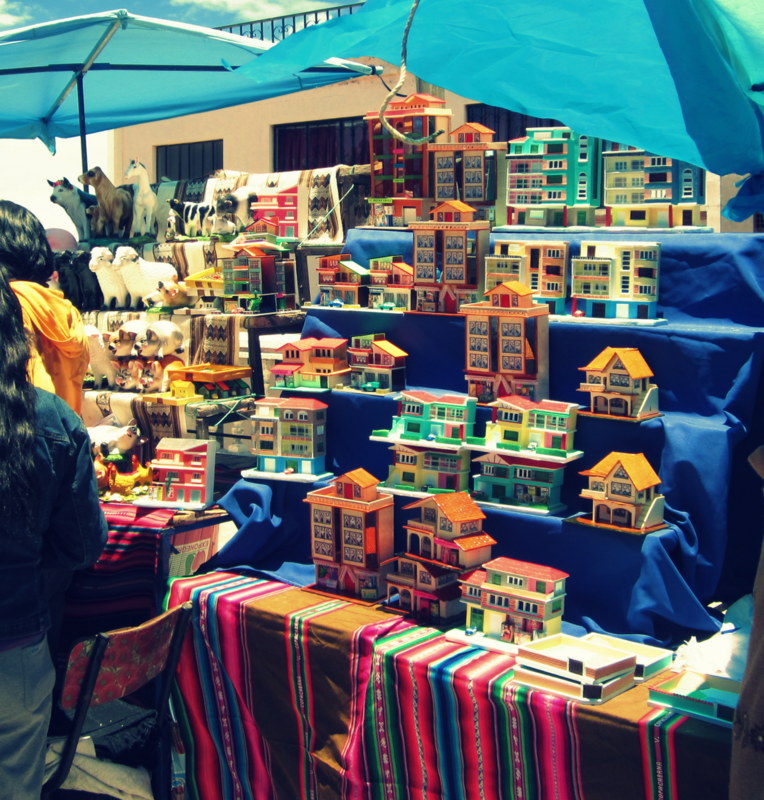
On January 24th, the streets of Copacabana are laden with vendors selling miniature items: mini money, mini houses, mini cars, etc. The traditions is to buy for yourself or a loved one whatever it is you would like to manifest in life. As part of the celebration, vendors also sell miniature cakes and breads.
I was surprised to see an abundance of mini plastic poultry (there didn't seem to be a shortage of the real thing), until I found out that chickens, roosters, and chicks are used to represent relationships, family, and children. Who knew?
The festival is presided over by Ekeko, the Aymara god of abundance himself, or at least his doll-sized representation, a chubby little cigar-chewing figurine. After people have chosen their items, which include mini diplomas and divorce certificates, they have them blessed by one of the many Yatiris (priest/medicine man)lined up in the middle of the market who passes them over a smoking pot of palo santo.
This day is also a popular time to climb the old stone steps and pray for good fortune at the stations of the cross, which lead to the summit of Cerro Calvario, overlooking the lake. The climb is about 150 meters up from the town, which is serious business at altitude.
As we watched the sun set behind the mountains towards Peru, abundance was definitely in the air.

Thursday, January 24, 2013

Return to Big Sky Country

I got up at 6am this morning and stepped out of the cave of a bedroom in my Paraguayan mom, Marina's, house in time to see the rising sun burning red through the trees. Marina's husband, Concepcion, was just finishing breakfast and on his way out to the field. Marina, my sister, Daisi, and I sat just outside the kitchen and proceeded to drink mate for the next hour and a half, while dogs, chickens, and piglets scurried around us. We chat about everything—relationships, religion, beekeeping, why the sky is bigger here. Then they are off in a flurry of activity, kicking up dust as they sweep the yard, picking up the dozens of fallen mangoes, feeding the animals, washing clothes and dishes, carrying small children to and fro. It feels good to be back.
“He was still too young to know that the heart's memory eliminates the bad and magnifies the good, and that thanks to this artifice we manage to endure the burden of the past. But when he stood at the railing of the ship and saw the white promontory of the colonial district again, the motionless buzzards on the roofs, the washing of the poor hung out to dry on the balconies, only then did he understand to what extent he had been an easy victim to the charitable deceptions of nostalgia.” --Gabriel Garcia Marquez (Love in the Time of Cholera)
Ryan and I left Florida January 6th, both sick and sleep deprived. As the city lights of Asuncion grew bigger and rose up to meet the plane as we made our final decent into Paraguay I felt exhausted, but exhilarated with thoughts of my first arrival here four years prior and all that was to lay ahead. Just another victim of nostalgia.
As the plane taxied into the gate, no time was wasted as passengers lined up in the aisles and then proceeded to file out, feigning (or not) oblivion as I attempted to stand up. Then everyone hovered around the tiny baggage carousel so closely that we had to crane our necks from the back to watch for our bags and then watch people try to maneuver their luggage through the stagnant travelers. How did I forgot the lack of, what I call common, courtesy that gnawed at me for two years?
We exited the airport around midnight into the oppressive city heat and proceeded to take an overpriced cab to our hotel. To recuperate, we splurged on an air-conditioned room in a nice hotel I used to stay in on visits to the Peace Corps office. We visited the office, the downtown area, and then we couch-surfed with a Paraguayan for a night before leaving the city.
The first day or so in Paraguay was filled with doubts about my purpose here. Why did I return to this hot, dusty place with gigantic, biting bugs, and a marked lack of customer service and pedestrian rights. Still, it felt somewhat gratifying to embrace the heat and re-explore my old stomping grounds. Arroyo Moroti, however, was where I wanted to be. On day three we made the journey into the yerba mate capital.
After two years, things look pretty much the same. Trees and children have gotten taller. There are also more motos and cars. When I first got here four years ago it was a rare thing to see a car drive down these red, sandy roads. I know it is unfair of me to want Paraguay to remain frozen in time, while people here are working hard to improve their lives with first-world machines.
It is debatable whether or not cell phones, tractors, and motorcycles are improvements. For some, they are conveniences that have allowed more work to be done with less effort, granted access to education, and created positive change in general. For others, these conveniences are merely distractions and money pits.
The other day I asked Daisi about going to swim in the Tebicuary, like I used to do almost every day in the hot season. She said they don't go in that water anymore, as it is contaminated with mercury from the nearby mines. The district of Paso Yobai has been mined for gold for years, and the mining operations continue to expand, most of them illegally.
There is a Canadian company here that has been “searching” for gold for the past ten years. They are required to follow environmental precautions and to leave a percentage of their profit in the community for infrastructure. No improvement have yet been made.
The bigger problem, however, lies with all the illegal mines, operating haphazardly all over this area. There has been awareness of contamination of streams, but because of the wealth it has brought to the area, it does not look like the mining will slow anytime soon. Even the mayor owns a mine. As usual the vast majority of the citizens here do not see a single Guarani of the profit, and any protests are quickly quelled. It scares me to think what will happen here in ten years, if mercury continues to leach into the streams, and subsequently into the soil, and the crops. Who is to be held accountable when no one takes responsibility?
* * *
“...he allowed himself to be swayed by his conviction that human beings are not born once and for all on the day their mothers give birth to them, but that life obliges them over and over again to give birth to themselves.” --Gabriel Garcia Marquez (again)
Being back in Arroyo Moroti and witnessing how little had changed, I was confronted with the same frustration with and admiration for Paraguayans that I felt years ago. I am frustrated by their complacency—their lack of motivation to create positive change, to stand up for themselves. On the other hand, I admire their contentment—with what they have, to do the same thing everyday, to be able to lay in a hammock and simply stare at the sky for an hour. Paraguay taught me to sit for long amounts of time, but I am the first to admit I still have a long way to go in the contentment department. I feel reaffirmed that we still have much to teach each other.
One more thing I am grateful has not changed: the sky. Before we arrived, I told Ryan that the Paraguayan sky is bigger than ours, and that is still the case. It is not a matter of more open space, or less structures blocking the view, because even in downtown Asuncion the sky seems to rise high, above the buildings, higher than it realistically should.
The sky is even more impressive here in Arroyo Moroti, with all kinds of clouds jutting up above the sugarcane fields, catching fire in pinks and purples as the sun dips below the Ybytyruzu Mountains. As Ryan pointed out, it's not just that you can see more sky, but that you can see further into the atmosphere than you can back home. I will always return to this big sky country.
One week in my old site turned out to be just the right amount of time. I ate enough sopa and overdone asado to keep my gums sore for days. I drank wine and coke with friends and family. I got some wind in my hair with my moto transport. I compared battle wounds with the new Peace Corps volunteers in the area. I also got to share with Ryan what was such a big part of my life.
When I lived here, Paraguay forced me to confront my own opinions about poverty, wealth, happiness, and my place in relation to those around me. It put the idea of living in community in perspective and granted me the opportunity to create meaningful relationships with people in a tiny village in the middle of a little-known landlocked country in the heart of South America. Next stop: Buenos Aires...

Wednesday, January 23, 2013

A Re-Introduction

After a lengthy hiatus from sharing my thoughts via words on a tiny strand of this great worldwide web, I return bearing new thoughts (and some old ones, too), with a brand new title and different topics than my previous “Adventures in Peace” blog. I feel inclined to articulate the intent of this shift. I call myself a homesteader, which is ironic because the longest I have ever stayed in one house was the two years I spent in Paraguay. In my defense of the word “homesteader,” I have long been a believer that home is where the heart is, and I have successfully created homes in various parts of the world, and while on the go. Home is in the community I create. Home is, dare I say, a state of mind. Nonetheless, I have steadily been manifesting and working towards the fruition of a stable home and land of my own, a place in which to put my hands into the earth, invest my time and energy, and then actually witness the fruits of my labor for years to come, not just for one farm season. I am happy to say that this vision of land and home is finally becoming reality!
I acknowledge that travel has helped to form the woman I have become, and that it will always be a part of my life. But for the next few years I foresee my time and resources going towards a more settled existence. This feels like a natural progression, especially while in the midst of traveling—schlepping packs and riding dirty, bathroom-less buses on curvy roads. I am evolving! This trip serves as a tribute to my former life, an introduction for Ryan, my love, to the beauty and mayhem of life south of the equator, and a not-so-final hurrah before we put our backpacks in our yet-to-be-built closet, and become a little less nomadic and lot more settled homesteaders.

Sunday, March 27, 2011

Accepting the Abundance (Hare Hare Lakshmi!)


Trust in the abundance. That has been my theme over the past two months--a pertinent one, as I leave my life and love in Paraguay, and continue into the unknown. Brazil, yes, is mostly uncharted territory, but I also include the US in the "unknown." After two and a half years, after all the changes I have gone through, I would be surprized if "home" didn´t feel a little foreign. In preparation for that I continue to call upon Lasksmi, the beautiful goddess of abundance (as well as wealth and beauty), to whom I was attracted at the early age of seven, with her long, flowing hair, draping sari, and her graceful stance, blooming out of a lotus flower. Growing up, my mom kept a picture of her on her bedroom alter, but it is only recently that I have come to appreciate her powers, and not just her looks.

I left Paraguay on a bus with a backpack full of my belongings and the heavy burden of a broken heart. I arrived in Florianopolis, Brazil two days before the start of my yoga teacher training: . I spent those two beautiful days on a tropical island shrowded in my own grief and utter confusing about my path, feeling vulnerable, and questioning my choices and my future. Luckily I was couchsurfing with my very hospitable new friend, Diego, who helped me to appreciate the kindness and generosity of total strangers. Abundance.

On February 6th I started my one-month-long intensive to become a GreenPath-FindBalance-Vinyasa teacher. With 28 fellow students from around the world and three gifted teachers (from San Francisco, Switzerland, and Brazil), I called Enchanted Mountain home, a beautiful jungle retreat center, overlooking the ocean, with a waterfall, natural swimming pools, and all the delicious, vegetarian food I could ask for. My body went through some serious cleansing after my meat-and-grease-heavy Paraguayan diet.

We became a family during the course. It was an intense process, at times, but a healing one. It was also a lesson in abundance--to give all I can in this moment, whether that means putting my honest strength into chaturanga and trusting that I will have more for what comes next, or allowing myself to give love without feeling like it´s something I need to hold onto. On the contrary, by opening my heart, it only becomes more satiated.


Upon graduation, I rented a house during Carnaval in the beautiful seaside village of Praia da Rosa with eight other yogi friends, and my girl, Betsy, who came down from the States. We maintained our yogic balance, while still showing Brazil how we can get down. And we can. After Carnaval, Betsy, Ali, and I headed north, back to stay with my couchsurfing friends for a few days, and then onward to Ilha do Mel (Honey Island). Our plans went slightly awry with the crazy amounts of rain that hit Paradise, washing out entire highways, but we managed to continue north in search of the sun. We landed on Ilha Grande (Big Island), a mostly-preserved chunk of jungle with some of the most beautiful beaches in the world, inhabited by monkeys, armadillos, iguanas, snakes, and birds (and that´s just what I saw!).

Betsy, Ali, and I went our separate ways; I, northward to Rio, where I couchsurfed with a friend I met in Rio last year during Carnaval. He took me to a beautiful beach with an amazing view of the city. I left after a few days, and on Ian´s suggestion, headed to the tiny village of Caraiva, in the state of Bahia. From Rio I took three buses, a ferry, and a rowboat to get here, but (or perhaps because of this) it was well worth it. Hugging the sea on one side of the village and a river on the other, this was the perfect place to relax with a cold coco verde and watch 360-degree sunsets.

I continue northward, stopping off to visit a friend I studied yoga with, and then onto Colombia to be reunited with my beloved sister after over a year!

Monday, February 14, 2011

Return to my Old Home


After Bolivia my travels took me back through Paraguay to visit volunteer friends and reconnect with my community. I had been a bit nervous about returning, wondering what my place would be in Arroyo Moroti after leaving two months beforehand. My work there is done, and there is another volunteer in my place now.

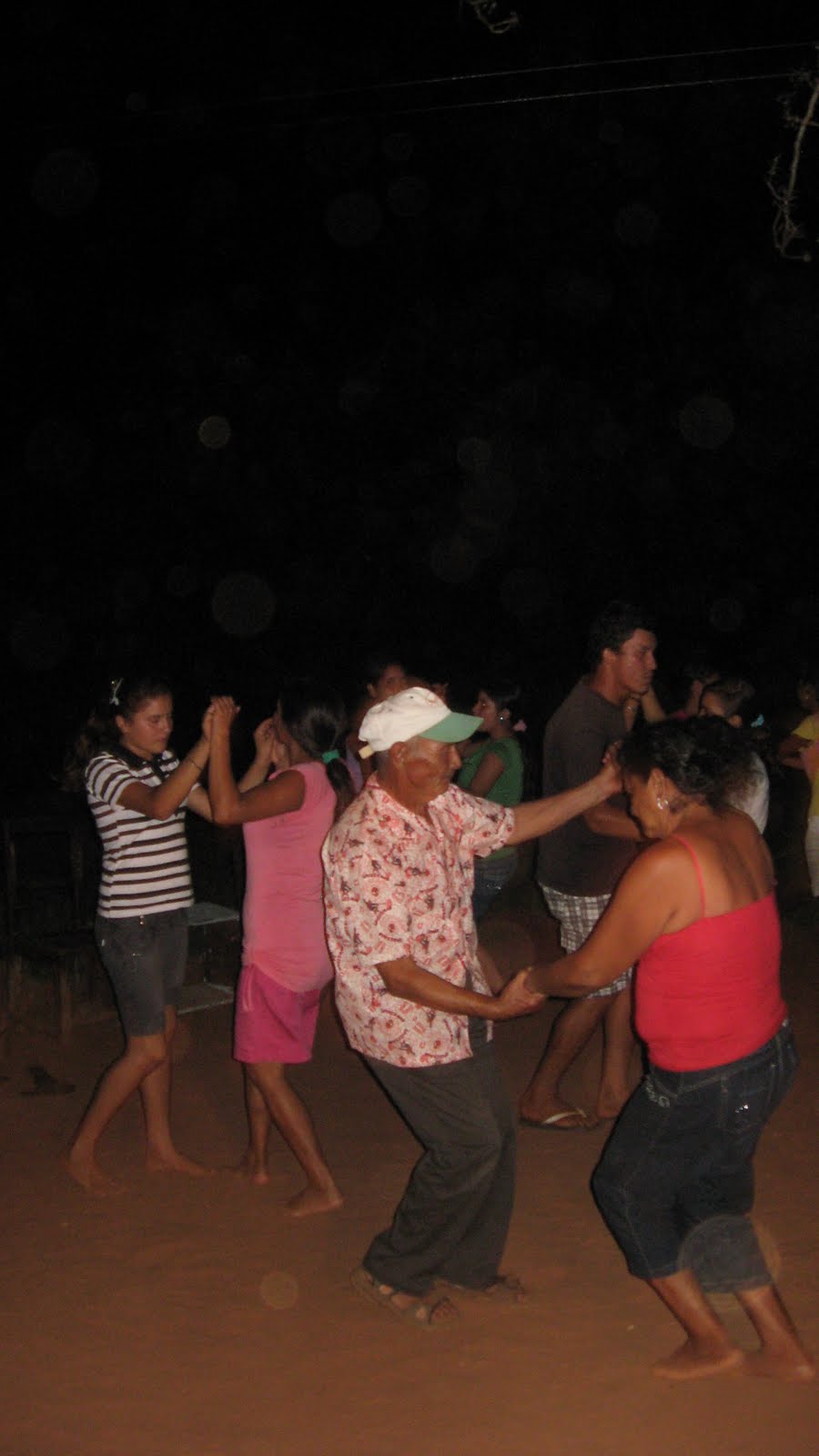
At the end of November I had two despedidas (going-away parties). One was sponsored by my farmers´committee, who killed a pig and chickens and gifted me and personalized leather terere set. My next despedida involved the whole community, or at least the people I knew. MOre grilled meat, more sopa, more dancing, and a drunken fist fight. Both of these parties were touching, but my last dinner with my favorite host family was the most emotional. My host mother, Marina, who has been a bottomless pit of support for me over the past two years, took me in her arms and told me how proud of me she was, and that I have become their daughter, sister, and friend; that I am always welcome in their family. We were all crying, even my 13-year-old host brother, Gustavo, and my shy dad.


I cried again as I watched the sun rise on the bus to the city, and many times after that. It was not only the sadness of leaving people who have become dear to me, but leaving a life that I have been blessed to experience and will probably never have again. Being a visitor to Arroyo Moroti is a definate plan, but I hold no false hopes that everything will be the same.

With these thoughts, I arrived back to Arroyo Moroti, on moto, and I felt completely welcomed and loved. I ate lunch at a different house everyday, a campo fiesta was thrown in my honor, and I felt free to enjoy the priveleges of living in Paraguay without the responsibility that came with working there. After a week, it was hard to leave a second time, as well, but now I know how easy it is to return.


My next adventures take me into the enchanted mountains of Brazil, where I am currently studying yoga. More on that later...